
How to Light a Meditation or Yoga Space: Warm, Low and Calm
A meditation space wants warm, low light and one calm focal point. Here is how to set it up, and how to choose a spiritual lamp with care.
Key facts
- Meditation and yoga spaces work best with warm, low, indirect light rather than bright overhead light.
- A single soft focal point, such as a glowing lamp, gives the eyes somewhere restful to settle.
- An LED lantern gives a candle-like glow with no flame, smoke or need to watch it.
- Place spiritual imagery respectfully: at or above eye level, off the floor, in a clean space.
What kind of light is best for meditation?
Warm and soft. A warm colour (amber rather than blue-white) and low brightness signal rest rather than work. Indirect light, bouncing off a wall or glowing through a shade or wooden panel, avoids glare when your eyes are half-closed.
Why use a single focal point?
Many meditation traditions use a point of focus: a candle flame, an image, a spot on the floor. A glowing lamp works the same way. It gives the eyes somewhere calm to settle in open-eye practice, and it marks the space as somewhere you go to slow down.
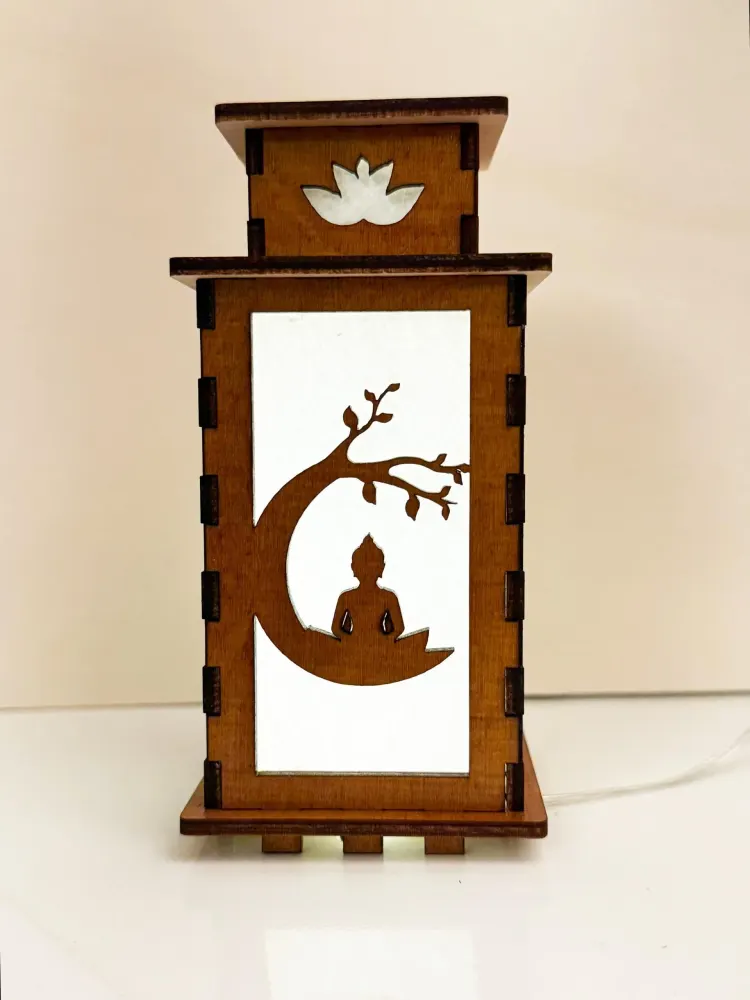
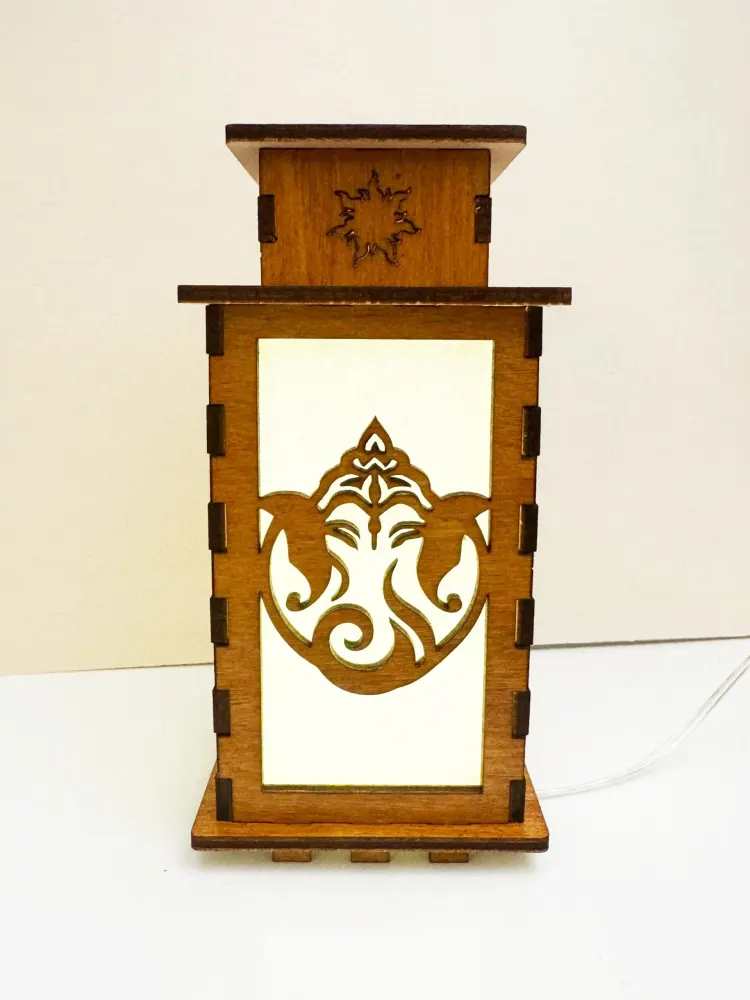
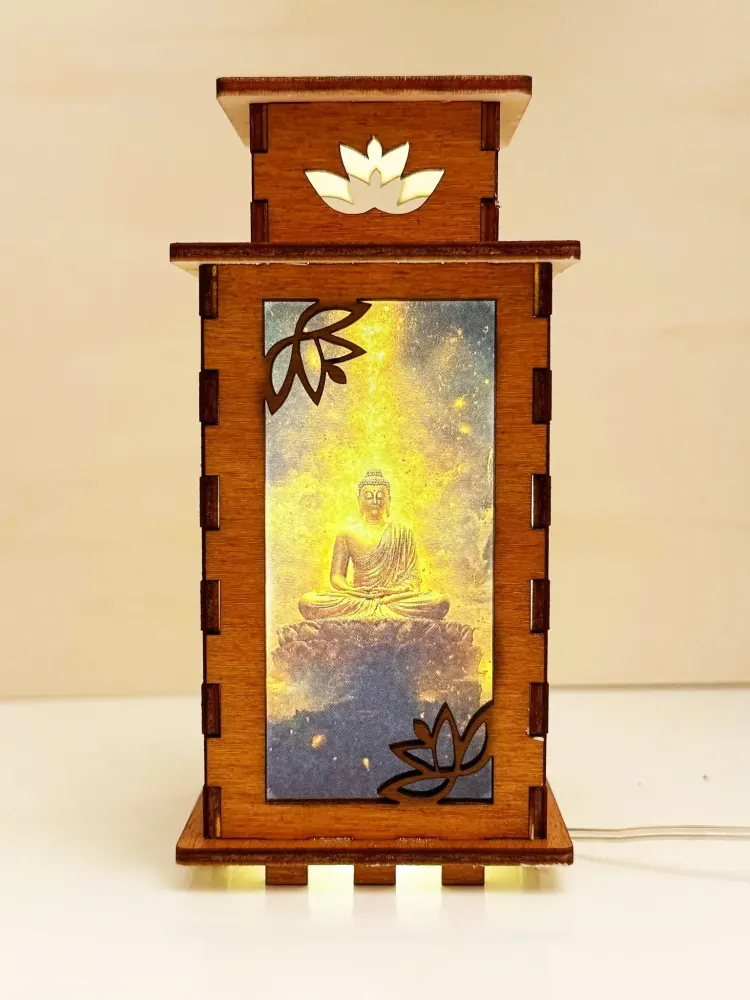
A lantern with a meaningful image, like the Buddha Tree of Life lantern or the Lord Ganesha lantern, can do both jobs at once.
Candle or LED for a meditation space?
Candles are traditional and lovely, but they need watching, they smoke and they are not ideal in small rooms or around pets. An LED lantern gives a similar warm glow with no flame, so you can close your eyes, lie in savasana or drift off without thinking about it. If you love a real flame, our Ganesha tea light holder is designed for one. We weigh the two up in LED lantern vs candle.
How do you set up a meditation corner?
You do not need a whole room. A corner works if it is used only for this:
- A cushion or mat facing a wall or window
- A low table or shelf at about eye level when seated
- One warm lamp as the focal point; switch the overhead light off
- A plant, a stone or an object that matters to you
- Nothing that reminds you of work: no laptop, no to-do list
How should spiritual imagery be placed?
Images of the Buddha, Ganesha, Shiva or Hanuman are sacred to many people. A few widely observed courtesies: keep them off the floor, at or above eye level; keep the space clean; and avoid bathrooms or placing them where feet point at them. Ganesha is traditionally associated with new beginnings and removing obstacles, which is why many people place him near an entrance.
Our guide to spiritual lamps and their meanings goes through each design, and what the tree of life means covers the most universal symbol in the collection.
Featured Wooden Lamps
Frequently Asked Questions
What colour light is best for meditation?
Direct Answer: Warm amber or soft white at low brightness. Avoid harsh cool-white overhead light.
Is a Buddha lamp good for a meditation room?
Direct Answer: Yes, if it is placed respectfully: off the floor, at or above eye level, in a clean space.
Can I meditate with an LED candle instead of a real one?
Direct Answer: Yes. An LED lantern gives a similar warm focal point without a flame, so it is safer and needs no watching.
Where should a Ganesha lamp be placed?
Direct Answer: Traditionally near an entrance or in a clean, elevated spot, reflecting his association with new beginnings and removing obstacles.
Enjoy this guide? Add Artiviesta as a Preferred Source to see our studio guides and lamp releases in Google.