
What Colour Night Light Is Best for Sleep? Warm vs Blue Light Explained
Warm, dim, amber light is the best colour for a night light. Here is why, what kelvin numbers mean, and where to put the lamp for the best sleep.
Key facts
- The best night light colour for sleep is warm and dim: amber, orange or red rather than blue or cool white.
- Colour temperature is measured in kelvin (K); warm light is roughly 2,700K and below, daylight is around 5,000–6,500K.
- Blue-rich light in the evening is linked to delayed melatonin release, which can make it harder to fall asleep.
- Keep a night light low, dim and out of direct line of sight from the pillow.
What is colour temperature?
Colour temperature describes how warm or cool a white light looks, measured in kelvin (K). A candle flame sits around 1,900K, a traditional filament bulb around 2,700K, and midday daylight around 5,500–6,500K. Lower numbers look golden; higher numbers look blue-white.
Most bulbs and LEDs list their colour temperature on the box. For bedrooms in the evening, anything labelled “warm white” or 2,700K and below is a good starting point. Night lights can go warmer still, into amber.
- ~1,900K: candlelight
- ~2,200K: amber night light
- ~2,700K: “warm white” bulb
- ~4,000K: “cool white” office light
- ~6,500K: overcast daylight
Why is blue light bad before bed?
Our body clock (the circadian rhythm) uses light as its main cue. Light rich in blue wavelengths is the strongest “daytime” signal, and research on evening light exposure links it with later release of melatonin, the hormone that helps us feel sleepy. Warm light contains far less blue, so it is gentler on that signal.
This does not mean a single blue light ruins your night, and individual sensitivity varies. It does mean that, if you are choosing a light to keep on while you wind down or sleep, warm and dim is the sensible choice.
Is red or amber light better for a night light?
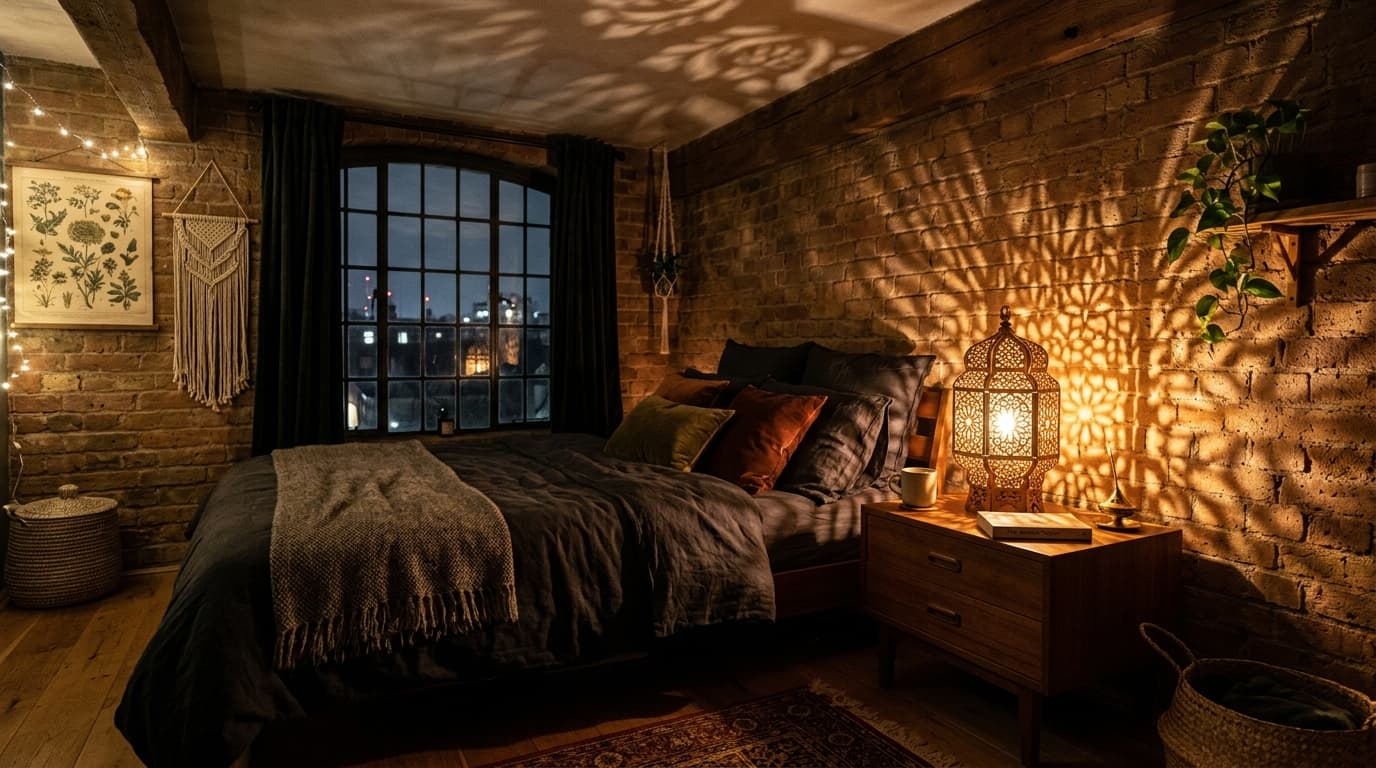
Both are good choices. Red light contains the least blue, which is why it is popular in some baby and sleep products. Amber is a little brighter to the eye and makes rooms, faces and wooden textures look natural rather than tinted, which most people find more pleasant for a lamp that is also decorative.
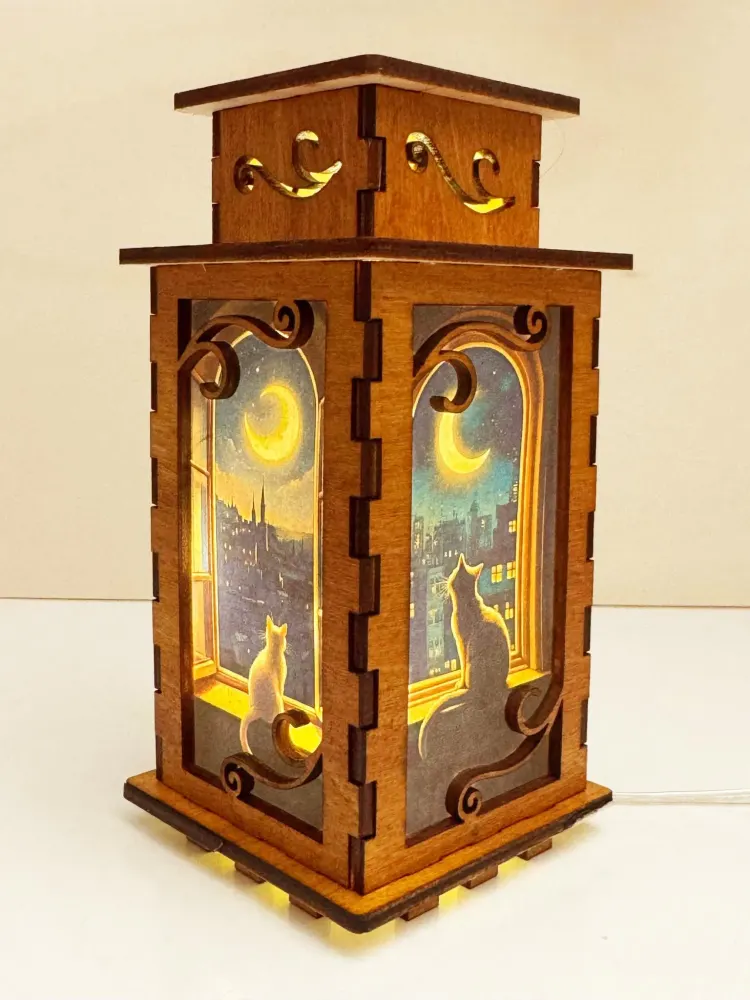
Our lamps use a warm white LED behind real wood, and the wood itself warms the colour further, giving an amber glow. For most bedrooms that is the sweet spot: easy to see by, cosy to look at and low in blue.
How bright should a night light be?
Bright enough to walk across the room safely, and no brighter. A good test: you should be able to make out furniture and the door, but not comfortably read small print. If the light is noticeable with your eyes closed, it is too bright or too close.
- Place it low: on a bedside table, shelf or floor-level surface
- Keep it out of direct line of sight from the pillow
- Use it across the room for babies and young children
- In hallways, one lamp on a low shelf is usually enough
What is the best night light for children?
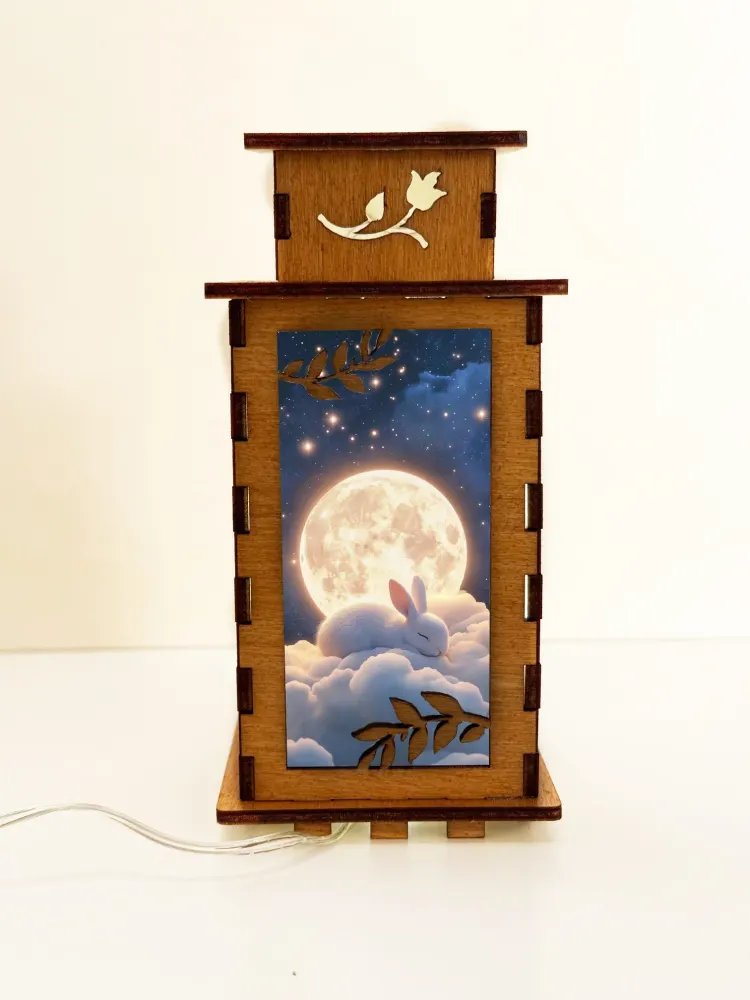
Children follow the same rules as adults: warm colour, low brightness, sensible placement. The difference is that a night light often has a second job, making the dark less scary. A familiar character, like a bunny or a friendly dinosaur, can turn the lamp into part of the bedtime routine. Our kids’ room and nursery guide covers this in detail.
Can a night light help you relax?
Lighting is part of what sleep specialists call sleep hygiene: the habits and surroundings that make sleep easier. Swapping overhead lights for a warm lamp in the last hour of the evening is one of the simplest changes you can make. We cover the whole room in creating a cosy bedroom with warm ambient lighting.
Featured Wooden Lamps

Frequently Asked Questions
What colour night light is best for sleep?
Direct Answer: Warm, dim light: amber, orange or red. Avoid blue or bright cool-white night lights in the bedroom.
Is a warm white LED good for sleep?
Direct Answer: Yes. Warm white LEDs (around 2,700K or lower) contain much less blue than cool white, so they are a good choice for evening and night lights.
Should I sleep with a night light on?
Direct Answer: Many people sleep better in full darkness, but if you or your child need a light, use a warm, dim one placed low and away from the pillow.
Are Artiviesta lamps warm or cool light?
Direct Answer: Warm. Each lamp has a warm white LED behind real wood, which gives a soft amber glow.
Enjoy this guide? Add Artiviesta as a Preferred Source to see our studio guides and lamp releases in Google.